

Hotel luxury has often been associated with spacious rooms, signature cuisine, spas, infinity pools, or increasingly exclusive services. But today, another much less tangible resource is beginning to gain value: silence. The trend even has its own name, hushpitality, a combination of hush and hospitality that Hilton has included among the trends that will define travel this year.
The idea responds to a shift in traveler priorities. Faced with routines dominated by notifications, hyperconnectivity, and overstimulation, vacations can become an opportunity to slow down. According to the Hilton 2026 Trends Report, based on global research with over 14,000 travelers from 14 countries, the main motivation for leisure travel in 2026 is to rest and recharge, indicated by 56% of respondents.
For the hotel industry, the conclusion is significant: rest is no longer simply a consequence of spending the night in a hotel, but becomes part of the value proposition.
From silence to a luxury experience
The concept of hushpitality goes beyond offering a room away from the elevator. It is about designing a stay where the guest can deliberately find calm, privacy, and disconnection. Hilton precisely points out that travelers seek destinations and experiences capable of reducing daily distractions and facilitating moments of tranquility, even silence.
This trend connects directly with the growth of the wellness hotel and so-called sleep tourism. The Global Wellness Institute identifies sleep tourism as one of the evolving areas of the global wellness economy and highlights how hotels, resorts, and spas are incorporating elements aimed at promoting rest: from lighting aligned with circadian rhythms to acoustically designed rooms, specialized bedding, or specific sleep programs.
The opportunity lies, therefore, in understanding silence as a service. It is not necessarily required to convert an establishment into a silent retreat. An urban hotel can create specially quiet rooms, no-call or no-meeting zones, reading spaces, interior courtyards, or small areas for disconnection. It can also take care of less visible, but decisive aspects, such as soundproofing, night lighting, or room location.
In this context, luxury changes its meaning. It no longer necessarily consists of adding more stimuli, but rather eliminating those that the guest does not want.
An opportunity for boutique hotels
Hushpitality can be of special interest to boutique hotels, which cannot always compete with large chains in terms of the number of services, facility size, or investment capacity. Their advantage may precisely lie in offering something much harder to replicate: a restful experience consistent with the establishment’s identity.
A small rural hotel surrounded by nature, for example, can make silence and the environment a central part of its positioning. An urban establishment can do the opposite: make the possibility of sleeping deeply its differentiating element within a noisy city. In both cases, the value is not only in the amenities, but in the experience of tranquility that is promised and delivered.
The Global Wellness Institute also points to an evolution of sleep tourism towards more comprehensive experiences. Rest is beginning to be addressed through environment and design, not just the mattress: temperature, light, noise, and ambiance are part of an ecosystem that can promote a more restorative stay.
This opens up possibilities for creating specific packages without the need for large investments. A hotel could design a “deep rest” experience that combines a particularly quiet room, breakfast served at a flexible hour, spa access, reading, a nature walk, or low-intensity activities. The key would be to avoid turning rest into another agenda packed with activities.
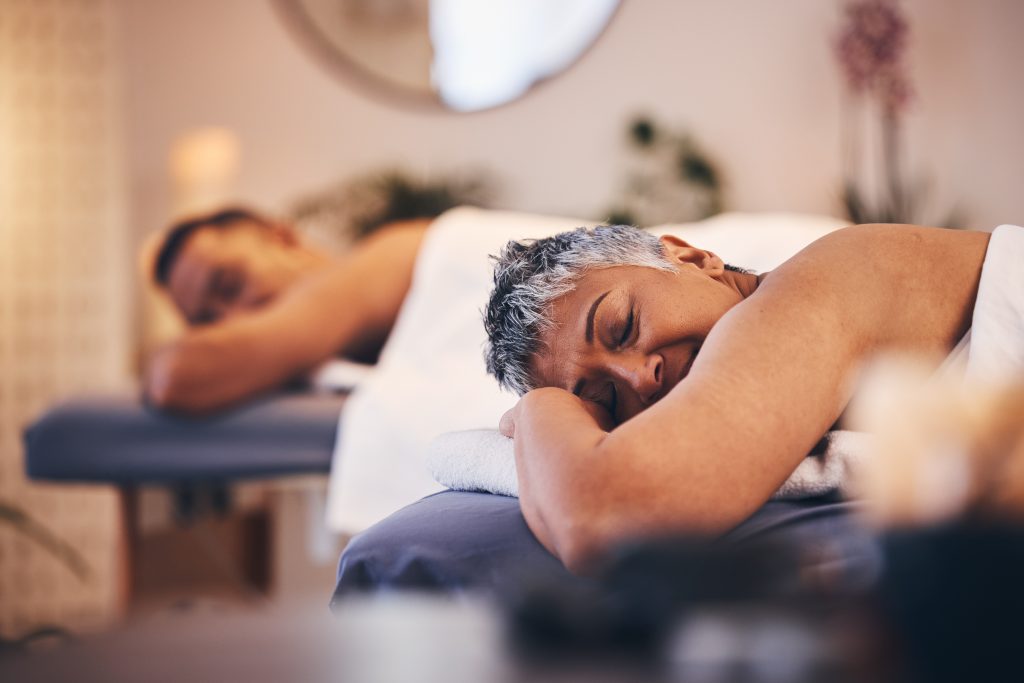
How to turn silence into a product
For travel agencies, OTAs, and tourism companies, the emergence of hushpitality also offers a new way to segment and market hotel offerings. Silence can become as relevant a search criterion as a pool, a gym, or proximity to downtown.
Hotels, for their part, can start by identifying what “silence” really means in their establishment. A rural property where the predominant sound is nature is not the same as a hotel in the center of a big city. The proposal must be honest and measurable: interior rooms, quiet floors, soundproofing, rest areas, or specific policies for certain spaces can all be part of it.
It is also important that communication does not promise more than the hotel can guarantee. Selling “absolute silence” in an urban establishment can lead to frustration; talking about specially quiet rooms or spaces designed to disconnect is much more credible.
The phenomenon also fits into a broader trend: the traveler is not necessarily looking to do more during their vacation, but rather to feel better upon returning. Hilton notes, alongside rest, other motivations related to nature, mental health, and personal time.
For the sector, the opportunity lies in observing how this demand evolves and translating it into concrete products. The hotel that manages to demonstrate that sleeping well, disconnecting, and enjoying a quiet environment are part of its experience can differentiate itself without necessarily resorting to spectacular facilities.
Ultimately, hushpitality turns silence into a valuable attribute. And for an industry accustomed to selling destinations, activities, and experiences, perhaps the next luxury consists precisely in offering something that is becoming increasingly scarce: a place where there is nothing to do, nothing to answer to, and, for a few hours, nothing to listen to.