
TravelAble: personalized accessibility information for PRM
Turn complex PRM (Passengers with Reduced Mobility) requirements from airlines and airports into a clear, structured, step-by-step guide within the passenger’s digital journey.
A personalized guide for PRM passengers and wheelchair users
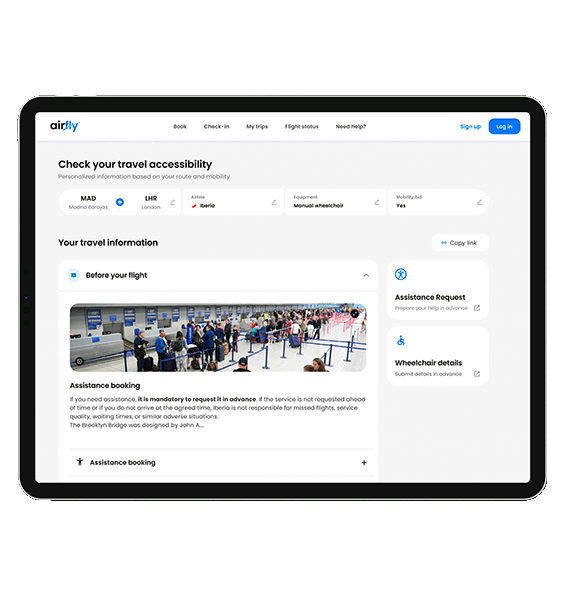
Immediate benefits of TravelAble
- Explains wheelchair requirements and battery regulations (including lithium) based on traveler profile
- Clarifies what to expect during security and boarding (the most stressful moments)
- Reduces operational friction and repetitive questions at counters and support
- Translates SSR codes (WCHR, WCHS, WCHC) into clear, understandable language
Challenges faced by passengers with reduced mobility
Before arriving at the airport, many passengers with disabilities or reduced mobility face uncertainty. Information is fragmented across airline websites, airport portals, regulatory documents, and operational procedures
This fragmentation creates confusion around wheelchair requirements, battery rules, SSR codes, security checks, aisle transfers, boarding processes, and equipment return.
For airlines, the cost is real:
- Increased support requests
- Friction at critical touchpoints
- Misaligned expectations
- Reputational/ESG exposure
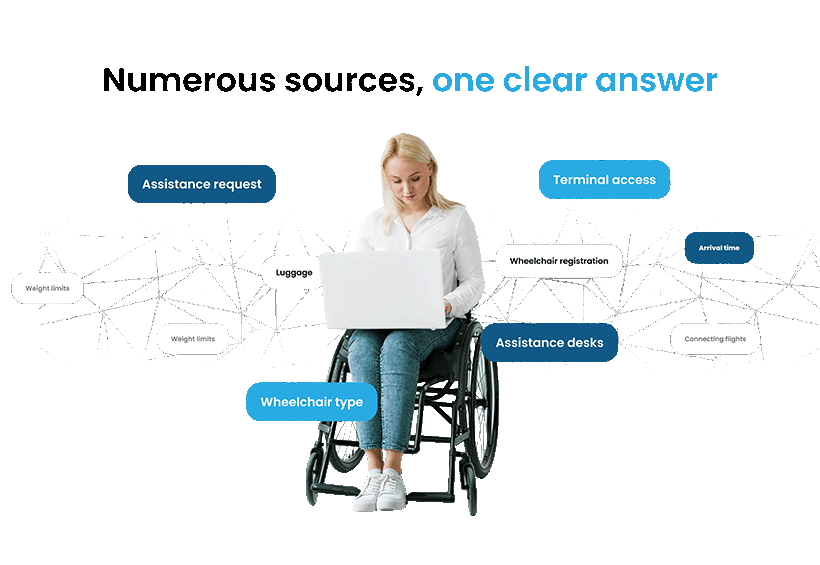
A personalized accessibility solution designed for airlines and airports
What is TravelAble
TravelAble centralizes airline and airport accessibility procedures and services into a single content model and delivers them as a personalized guide throughout the journey.
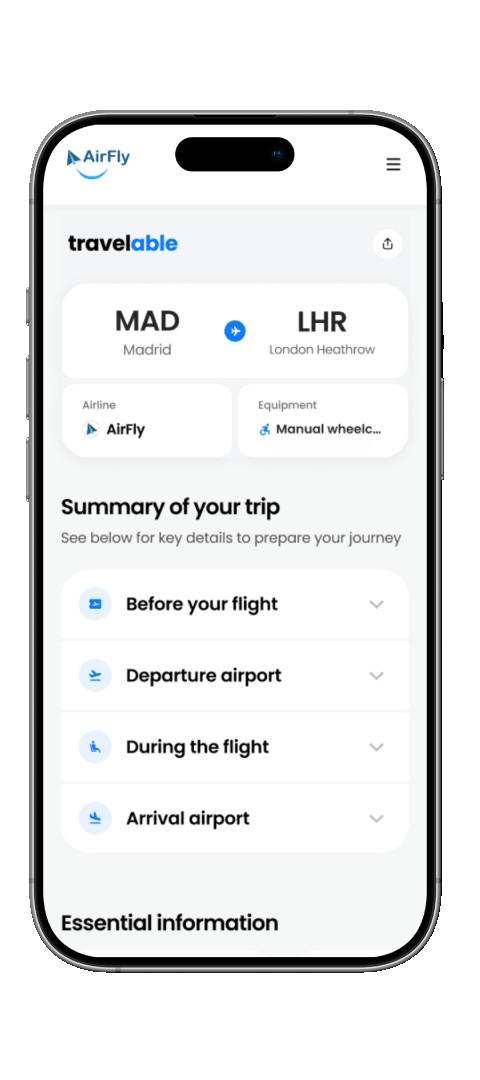
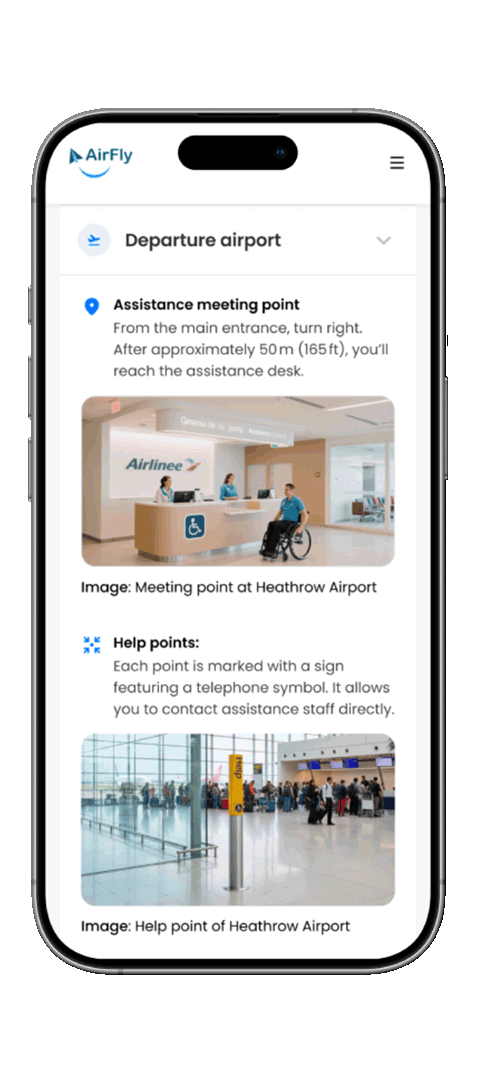
What TravelAble does

Centralizes accessibility requirements (airline + airport)

Personalizes information based on profile (equipment, battery, travel context)

Organizes content by journey stages

Translates technical SSR codes into plain language

Designed to align with WCAG 2.0 AA standards

Based on official airline and airport sources
Behind the widget
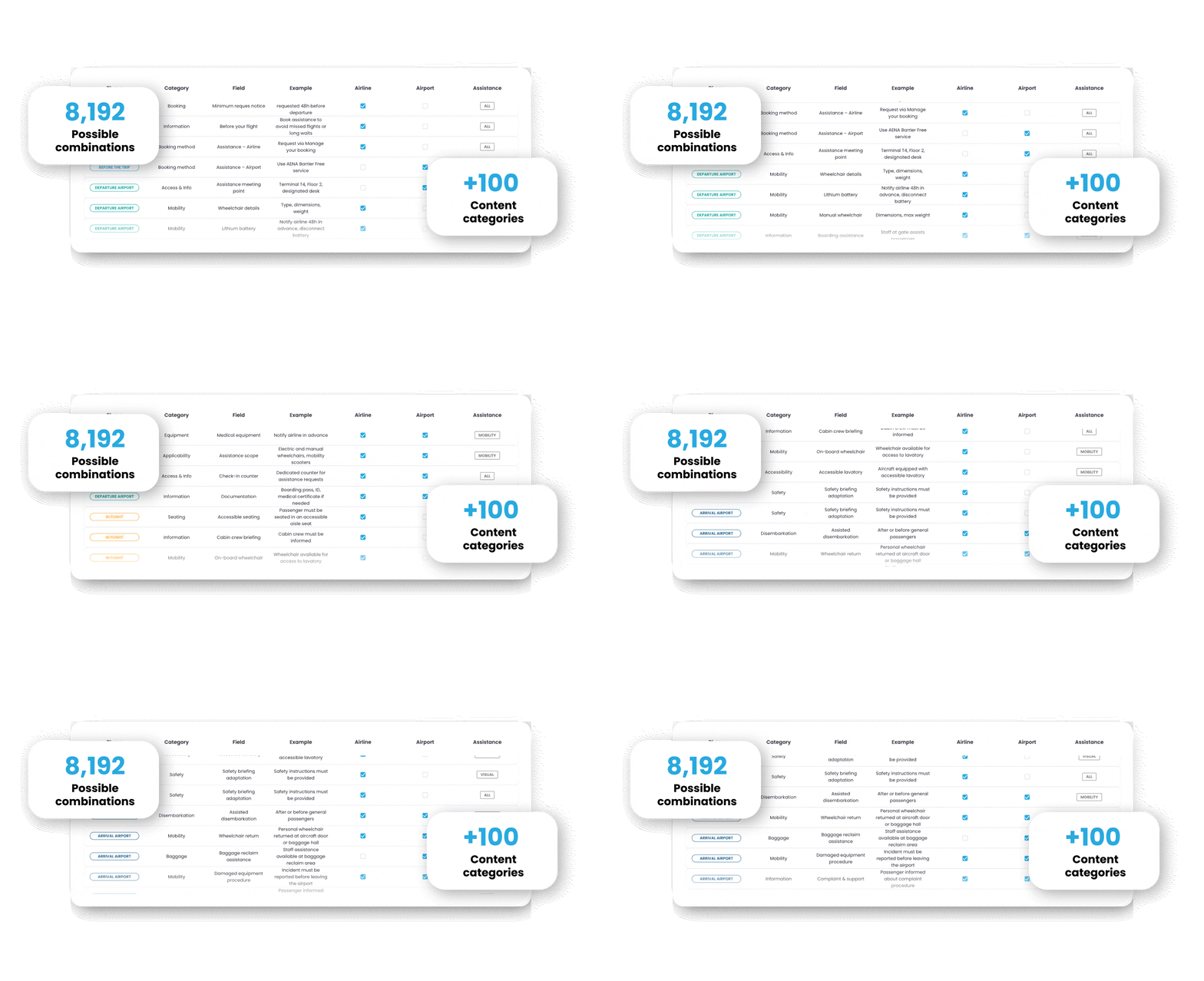
- 100+ structured content categories
- 8,000 possible requirement combinations
- Airline- and airport-specific procedures
- Transforms complex processes into clear answers
How TravelAble works
3 steps, one clear experience
Step 1Passenger profile & travel context
Route, airline, airports, equipment type (manual/electric), battery type, additional aids, and care conditions. Because in accessibility, personalization is not optional.
Step 2Personalized guide by journey stage
TravelAble delivers structured, step-by-step information before the flight, at the departure airport, during the flight, and upon arrival.
Step 3Clear actions & aligned expectations
What to request, when (including recommended advance notice), where to go, how boarding will take place, and how/when equipment is returned.
Common use cases
Use cases and coverage
SSR & special assistance:
Explaining WCHR/WCHS/WCHC and what each level means
Security & boarding:
Reducing uncertainty at the most stressful journey points
Connections:
What to expect in transit, transfer wheelchairs vs temporary equipment return depending on timings
Coverage checklist
Assistance request processes, IATA SSR categories, wheelchair handling policies, battery regulations, weight limits, infrastructure accessibility, transfers/aisle chair, and security procedures.
Clear benefits for each airline/airport team
Digital / Product
- Less friction in assistance and SSR selection
- Clear information integrated into the digital journey
Customer Care / CX
- Fewer repetitive queries and reduced pre-trip anxiety
Operations
- Fewer last-minute issues with equipment and batteries
- Better alignment with handling and processes
ESG / Accessibility
- Consistent, inclusive communication
- Supports brand leadership (not just compliance)


Ready to integrate into your digital ecosystem
Implementation & integration
TravelAble is designed for digital environments: it adds a structured content layer that can be deployed as a widget across websites, apps, and other digital experiences, ensuring consistency and scalability.
Official, structured PRM information (not unstructured text)
Governance, technology & compliance
TravelAble is based on official airline and airport sources and is continuously monitored to keep information up to date.
Designed to align with WCAG 2.0 AA and digital accessibility best practices.


Validated with those who need it most
Built with real travelers
TravelAble was developed through direct interviews with wheelchair users and accessibility associations. Research identified recurring frictions: uncertainty in security, inconsistent boarding procedures, risks in equipment handling, and communication gaps.
One principle guides the product architecture: there are as many disabilities as there are people. Personalization is essential..
Insights from travelers with accessibility needs
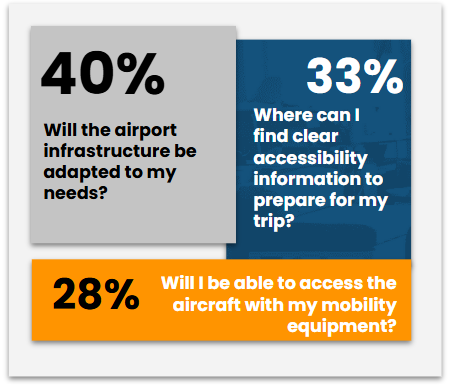
According to these surveys:
- 40% don’t know if airport infrastructure will meet their needs
- 33% struggle to find clear accessibility information to prepare their trip
- 28% don’t know if they will be able to board with their mobility equipment
At the airport, security checks and long distances between key points are the main sources of friction.
These insights highlight the need for clear, accessible, and personalized information throughout the journey.
Future of TravelAble: from PRM to full coverage
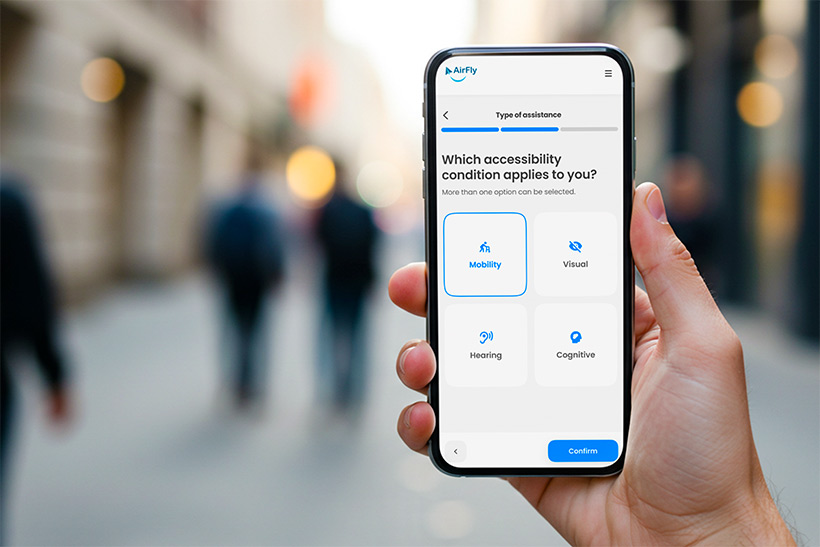
TravelAble starts with PRM and evolves toward broader accessibility coverage: visual, auditory, cognitive, and hidden disabilities, medical equipment filters (e.g. oxygen devices), and deeper connection support and personalization.
Financed by



Frequently asked questions about accessibility information on airlines
What is TravelAble?
What does PRM mean?
What are SSR codes (WCHR, WCHS, WCHC)?
- WCHR: Passenger can walk onboard but cannot manage long distances or stairs
- WCHS: Passenger cannot manage stairs
- WCHC: Passenger is completely immobile
TravelAble translates these technical IATA codes into clear, actionable information.
Does it include battery regulations?
Including:
- Watt-hour limits for lithium batteries
- Handling rules for wet and dry batteries
- Battery removal and packaging requirements
- Manufacturer documentation guidelines
How does it help operationally?
- Reduces support requests
- Clarifies security and boarding
- Minimizes last-minute issues
- Improves accessibility communication
Is it WCAG compliant?
Lead in accessibility. Don’t just comply.
Airlines already personalize pricing, ancillaries, and loyalty. Accessibility deserves the same structured approach..
TravelAble transforms complex requirements into a clear, personalized experience: less friction, better operations, greater trust..