
When we think of an airline, we usually imagine planes, airports, and destinations. But today, much of the journey starts long before boarding: online. Landing pages —the places where we search for flights, check offers, or review our booking— are now a key touchpoint between airlines and travelers.
In this analysis, we’ll look at how United Airlines builds its digital experience: what works well on its pages, what could be improved, and which industry trends are reflected in its online strategy.
Design and Usability: Everything Within Reach
The first thing that stands out when entering United’s website is that it’s designed to solve the essentials without fuss. The flight search, online check-in, and “Manage Trip” option appear right away. No scrolling, no endless menus —everything is just one click away.
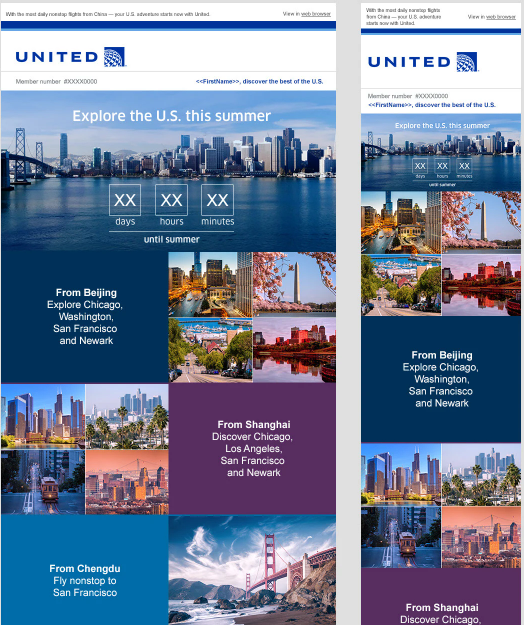
United also adapts its site depending on the traveler’s country and language. This isn’t just practical, it builds trust: you see prices in your own currency and messages in your language.
A particularly interesting feature is the interactive destination map. It’s more than just a list of cities: you can filter by budget, type of trip, or duration. It’s a tool that combines inspiration (discovering new places) with practicality (seeing available flights).
Overall, the experience conveys order and simplicity, which is key in a sector where stress often accompanies the traveler.
Conversion Strategies: Turning Visits into Bookings
An airline landing page isn’t just a shop window: it’s designed to make you book. United knows this and works it in several ways:
- Visible deals: the promotions section highlights attractive prices and limited-time discounts, helping undecided users take the leap.
- Payment flexibility: you can combine money and loyalty miles in a single purchase, lowering barriers and encouraging more travelers to complete the transaction.
- Simplified management: the “Manage Trip” page gathers changes, cancellations, and upgrades in one place, preventing users from bouncing between sections.
All of this builds confidence and minimizes booking abandonment, a common weak spot in travel websites.
Visual Content and Storytelling: More Practical Than Inspirational
Compared to other more “aspirational” airlines, United goes for a functional approach. On its landing pages we see clear images of cabins, seats, and loyalty program benefits rather than sweeping emotional campaigns.
That doesn’t mean inspiration is absent: in the destinations section you’ll find attractive photos and short descriptions that spark travel ideas. But the priority is showing what you get: comfort, perks, and savings.
In short, its storytelling is straightforward: “travel without complications.”
Social Media and Digital Marketing: From Inspiration to Action
United also leans on social media as a megaphone for its brand. Short traveler videos, testimonials, and user-generated content are gaining weight. The key is that what you see on Instagram or TikTok connects with what you find on the website: offers, destinations, and aligned experiences.
There’s an interesting opportunity here: bringing more of that real traveler content into the landing pages, for example through customer photos or short clips. That would add authenticity and bridge the gap between social inspiration and booking.
Personalization and Segmentation: Speaking to Every Traveler
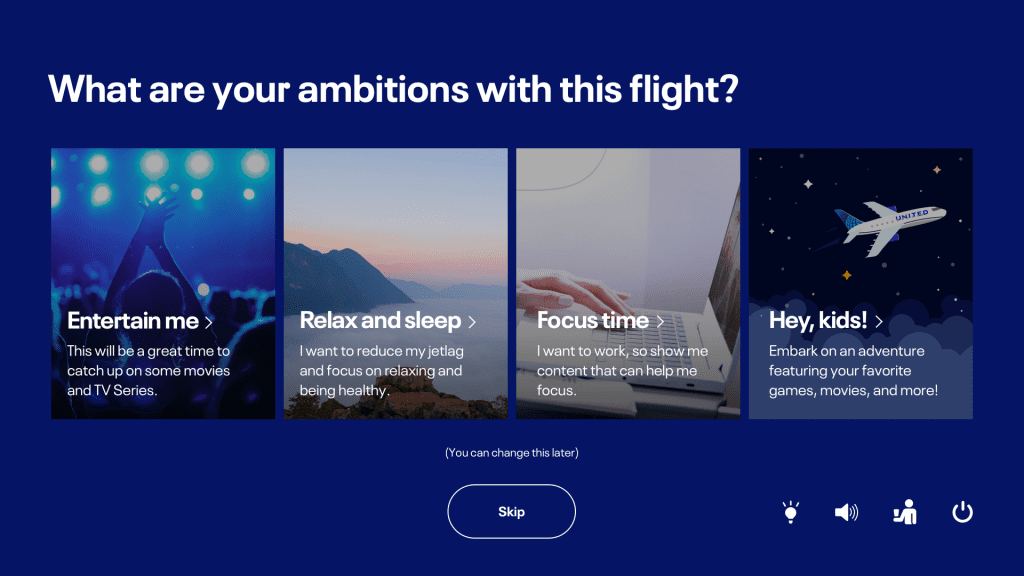
Not all passengers look for the same things, and United knows it. Its site and app adapt to context:
- It changes based on your location to show relevant prices and promotions.
- In the app, it offers hyper-personalized info like connection times, airport routes, and real-time alerts.
While much of this happens in the app, the challenge is to bring these functions to the website too, so that personalization starts from the very first search.
Web Design Trends Already Visible at United
The travel sector is adopting clear trends in digital experience, and United reflects many of them:
- Minimalism: clean, straightforward forms without unnecessary fields.
- Microinteractions: small messages or visual cues confirming that an action was successful.
- Mobile-first: the site is designed with mobile in mind, with large buttons and processes broken into short steps.
The big challenge, as with many airlines, is not overwhelming users with too many options during the booking management phase. Small tweaks here can make a big difference in the final experience.
SEO and SEM: Winning Visibility in Search Engines
If you don’t appear on Google, you don’t exist. United handles this well:
- Its destination and route pages are optimized to capture searches like “flights to New York” or “fly to Tokyo.”
- The deals and miles sections act as entry points from search engines, with updated content that Google rewards.
According to tools like Sistrix, United has been gaining international visibility in recent years thanks to this strategy. The key is to maintain evergreen pages (that don’t expire) while refreshing them with seasonal promotions.
Innovation and Interactive Experiences: From Chatbots to Dynamic Maps
Innovation doesn’t always mean big fireworks. At United it shows in small details that make the experience smoother:
- An AI-powered chatbot that answers basic questions.
- Interactive tools like the destination map, filterable by budget.
- App functions like ConnectionSaver, which adjusts your itinerary so you don’t miss your connection.
These features aim to ease passenger anxiety and reinforce the idea that United isn’t just selling you a ticket, but accompanying you throughout your digital journey.
United Airlines understands that in today’s digital world, the real “Friendly Skies” begin on its website. Its landing pages combine practicality (searching and managing flights in seconds) with innovative touches that reduce traveler stress.
The next step is to strengthen the inspirational side —with more stories and authentic traveler content— and bring app-level personalization to the website as well. That way, United won’t just be an efficient airline, but also a close and memorable brand from the very first click.