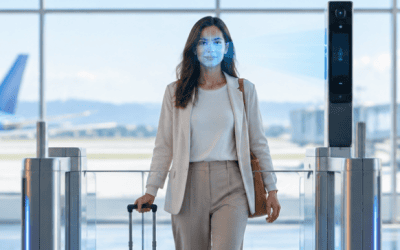


Air travel should be a comfortable and pleasant experience for all travelers alike. However, for many people with disabilities, reduced mobility, or specific needs, the airport experience includes moments of tension that are not always visible at first glance.
Last week we spoke about flying with reduced mobility. Now we are going to focus on the two stages of the journey that account for most incidents: security checks and boarding.
Both processes share characteristics that make them particularly sensitive. They are mandatory stages, with strict protocols, limited timeframes, and little room for individual adaptation. In this context, any barrier—physical, communicative, or organizational—is amplified. Various reports and specialized organizations agree that it is precisely during these phases where real accessibility still presents the greatest gaps. Passengers with specific needs require personalized assistance to move through these stages without unnecessary obstacles.
Security Checks: Protocols That Do Not Always Adapt
Security screening is one of the strictest filters within the airport environment. Its purpose is clear: to ensure aviation safety. However, the way it is carried out can create difficulties when it does not account for the diversity of travelers.
People who use wheelchairs, prosthetics, pacemakers, or other medical devices often encounter procedures that do not always align with their physical reality and may cause significant uncertainty. In some cases, detection systems require additional manual inspections or screenings that prolong the process and create discomfort. The Spanish Aviation Safety Agency explains the rights of passengers with reduced mobility and the obligation to provide appropriate assistance in these situations. At times, security personnel lack clear instructions on how to conduct manual screenings respectfully or how to handle lithium batteries in powered wheelchairs, which slows the process and creates a sense of vulnerability.
Beyond mobility, there are also so-called invisible disabilities, such as certain autism spectrum disorders, hearing impairments, or cognitive conditions that are not externally apparent. In these cases, the security screening environment—constant noise, rapid instructions, time pressure—can be especially overwhelming.
For all these reasons, it is essential to prioritize training programs that include both the technical handling of advanced mobility equipment and empathetic communication protocols. The International Air Transport Association (IATA) is working on the development of global standards to improve this area, recognizing that accessibility is not only a matter of legal compliance but also a strategic opportunity to enhance operational efficiency.
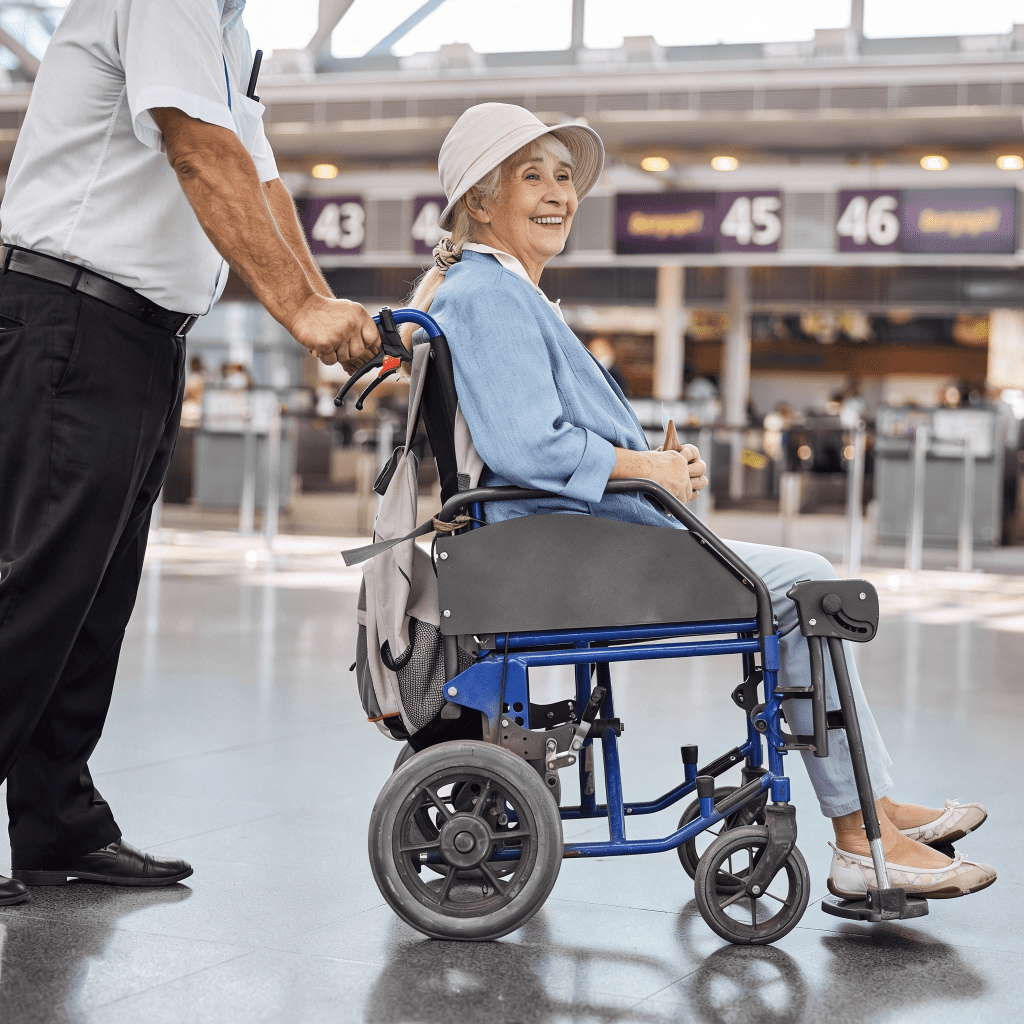
Boarding: Coordination and Dignity at Stake
After passing through security, the next major challenge is boarding. Boarding combines logistics, tight timelines, and coordination between different teams. And it is precisely in that coordination where failures most often occur.
Passengers requesting special assistance must communicate this in advance, typically 48 hours before the flight. Airlines and airports are required, under European regulations, to provide support during the transfer to the aircraft and when taking their seat.
However, in practice, delays in the arrival of assistance staff or communication breakdowns between assistance services and the cabin crew can occur. This can result in priority boarding—designed to facilitate access—becoming a source of anxiety.
Structural factors also play a role, such as the use of stairs at airports without jet bridges or the lack of accessible signage. When infrastructure does not support accessibility, boarding stops being a brief procedure and becomes a complex operation.
The boarding moment is the ultimate test. It is here that the airline’s logistics and the airport’s assistance service must coordinate with precision. However, shortcomings in the quality of technical assistance are common. Many passengers fear the moment they must separate from their personal wheelchair, as improper handling of equipment in the cargo hold can mean losing their primary mobility tool for the remainder of the journey. They need clear information in advance about the delivery of their wheelchair or mobility equipment.
Furthermore, physical access to the aircraft still presents deficiencies. Although the use of jet bridges is ideal, boarding is often carried out remotely, requiring the use of lifting platforms that are not always immediately available. Once on board, the most delicate phase is the transfer from the wheelchair to the assigned seat. Not all aircraft models have sufficient adapted equipment, and not all staff members have received adequate training to carry out this process comfortably and respectfully. Various passenger rights advocacy organizations have pointed out that this stage requires more standardized protocols focused on the traveler’s dignity.
Recent studies indicate that up to 45% of passengers question the quality of assistance during boarding and deplaning, reporting waiting times that sometimes exceed 30 minutes once the rest of the aircraft has been emptied.
Toward a Truly Inclusive Experience
The tourism and airport sector has made progress in recent years, but it still faces the challenge of integrating universal accessibility as a central part of operational design. It is not merely about complying with regulations, but about ensuring that every traveler can move through security and boarding under equal conditions.
Solutions include strengthening internal coordination, investing in accessible technology, and prioritizing ongoing staff training. It is also essential to systematically listen to the experiences of passengers with disabilities in order to identify genuine areas for improvement.
At Smartvel, we are fully aware of the challenges faced by people with reduced mobility. We have listened to them and, with the help of experts, have created an technology solution that addresses the lack of information these users often encounter—ensuring that the entire travel experience, from pre-trip planning to departure from the airport, is clear, accessible, and straightforward. In the coming weeks, we will share our small but meaningful contribution to making travel an accessible experience for everyone.