


The digital showcase of tourism is no longer limited to traditional search engines. Today, more and more users discover destinations without typing a single word into Google. A simple swipe on their mobile brings up articles, recommendations, and travel ideas in Google Discover. For OTAs, airlines, hotels, and destinations, this channel represents a unique opportunity: being present at the exact moment when the traveler has not yet decided where to go but is already open to inspiration.
The challenge lies in how to appear there. Travel SEO now faces a new scenario, where it’s no longer just about optimizing keywords, but about understanding the recommendation algorithm and adapting content to the logic of discovery.
Travelers in Inspiration Mode: The Value of Google Discover
Unlike traditional search, where the user types “best getaways in November” or “cheap flights to Lisbon,” in Discover it is the algorithm that anticipates and places a carousel of articles and images in front of the traveler’s eyes. It is, therefore, a space of proactive discovery: Google analyzes interests, habits, and trends to display content that sparks the travel idea.
In this context, a destination’s digital visibility depends on a brand’s ability to generate attractive, updated, and relevant content that aligns with user consumption patterns. An article with powerful images about European Christmas markets, for example, can appear in thousands of feeds weeks before users begin searching for “things to do in Vienna in December.”

What Google Discover Rewards in Tourism
Discover works under different principles than classic SEO, but there are clear patterns that help destinations gain visibility:
- Evergreen content with a seasonal twist: timeless articles adapted to the tourism calendar. “Best city breaks in autumn” or “quiet beaches in winter” work well because they combine durability with timeliness.
- High-quality images: first impressions are visual. Discover prioritizes large, appealing, pixel-free images capable of generating clicks without prior context.
- Source authority: travel media, OTAs, or blogs with credibility have a higher chance of appearing. Editorial consistency and frequency of publication matter.
- Trending topics: the more connected the content is with what users are searching for at the moment, the higher the likelihood of visibility.
This opens an interesting opportunity for tourism brands: it’s not only about following the seasonal calendar, but anticipating it with inspiring narratives.
Travel SEO in the Era of Infinite Scroll
Optimizing for Google Discover forces us to rethink travel SEO strategy. It is no longer enough to secure the first position in search results, because Discover has no traditional ranking. Instead, the algorithm evaluates the affinity between the content and the user’s interests.
This means destinations and tourism brands need to think in terms of audiences, not just keywords. What does a user who searched for flights to Rome two weeks ago want to read now? What could attract someone who follows Italian food accounts on YouTube? The answer lies in the combination of SEO, behavioral analysis, and editorial creativity.
Destination Content That Connects
A key aspect for OTAs and tourism brands is how destinations are presented. It’s not enough to list monuments or compile practical data: stories must be told in ways that match today’s digital consumption.
The articles that perform best in Google Discover often have an experiential focus. For example:
- Instead of “Things to Do in Budapest,” a piece titled “Budapest in Autumn: Historic Cafés and Walks Along the Danube” is more engaging and click-worthy.
- Instead of “Beaches in Thailand,” an article like “Where to Find Thailand’s Secret Beaches Before the Year Ends” taps into curiosity and the desire for exclusivity.
This narrative shift makes content more attractive both for travelers and the algorithm.
Smartvel and the Power of Dynamic Content
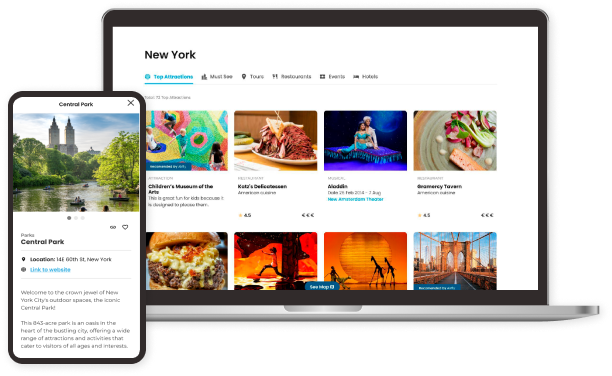
In this landscape, having content that is constantly updated and tailored to each destination is decisive. Companies like Smartvel specialize in this: powering airline, hotel, and OTA websites with event calendars, local recommendations, and destination guides that remain continuously refreshed. This blend of inspiration and utility increases the chances of appearing in Discover, because it aligns with what travelers are truly seeking: live, updated, and relevant information.
The real value lies in avoiding static content. If new articles or updates on festivals, exhibitions, or local experiences are added weekly, the algorithm detects freshness and authority, boosting visibility.
The Role of OTAs in Destination Visibility
For OTAs, optimizing presence on Google Discover means not just showcasing flights or hotels, but becoming platforms of inspiration. Travelers no longer differentiate between reading a blog or browsing an OTA: what they want is quick, reliable ideas for their next getaway.
That’s why integrating inspirational content sections, destination stories, or interactive maps is a direct way to increase exposure. Moreover, this approach not only enhances visibility in Discover but also builds trust and engagement in the early stages of the customer journey.
Practical Strategies to Stand Out
Although Google does not provide exact formulas, some proven practices increase the chances of appearing in Discover within the travel sector:
- Focus on impactful visual formats: high-quality vertical photos, original images, and short videos embedded in the pages.
- Maintain editorial consistency: it’s not about a one-off post, but about sustaining a coherent, ongoing content strategy.
- Craft titles toward inspiration and timeliness: headlines that spark curiosity without resorting to clickbait.
- Identify interest peaks through search trends and align content with the tourism calendar.
When these practices are combined with a solid travel SEO strategy, the result is a virtuous circle: content gains visibility, users find inspiration, and the brand positions itself as a reference.
Looking Ahead to the Future of Digital Discovery
The Google Discover feed is just one part of a broader digital ecosystem where travel inspiration flows through increasingly fragmented channels: YouTube Shorts, TikTok recommendations, Instagram carousels. However, Discover’s value lies in its ability to connect casual user consumption with a destination’s or brand’s concrete offer.
OTAs and travel providers that successfully link their content to this channel will be better positioned to capture travelers from the very first spark of inspiration. Because, in the end, the battle for digital visibility doesn’t start at the moment of search, but much earlier: in that instant when someone, without planning it, swipes their finger and discovers a new place they might be visiting in just a few weeks.