

Hyatt Hotels has become one of the most recognized hotel brands in the world, with a global presence that combines luxury, modern hospitality, and a strong commitment to digital experience. In this analysis, we explore how Hyatt structures and optimizes its landing pages, evaluating their design, usability, conversion strategies, and more to identify best practices and opportunities within the travel industry.
Design and Usability: Clear Structure with Visual Focus
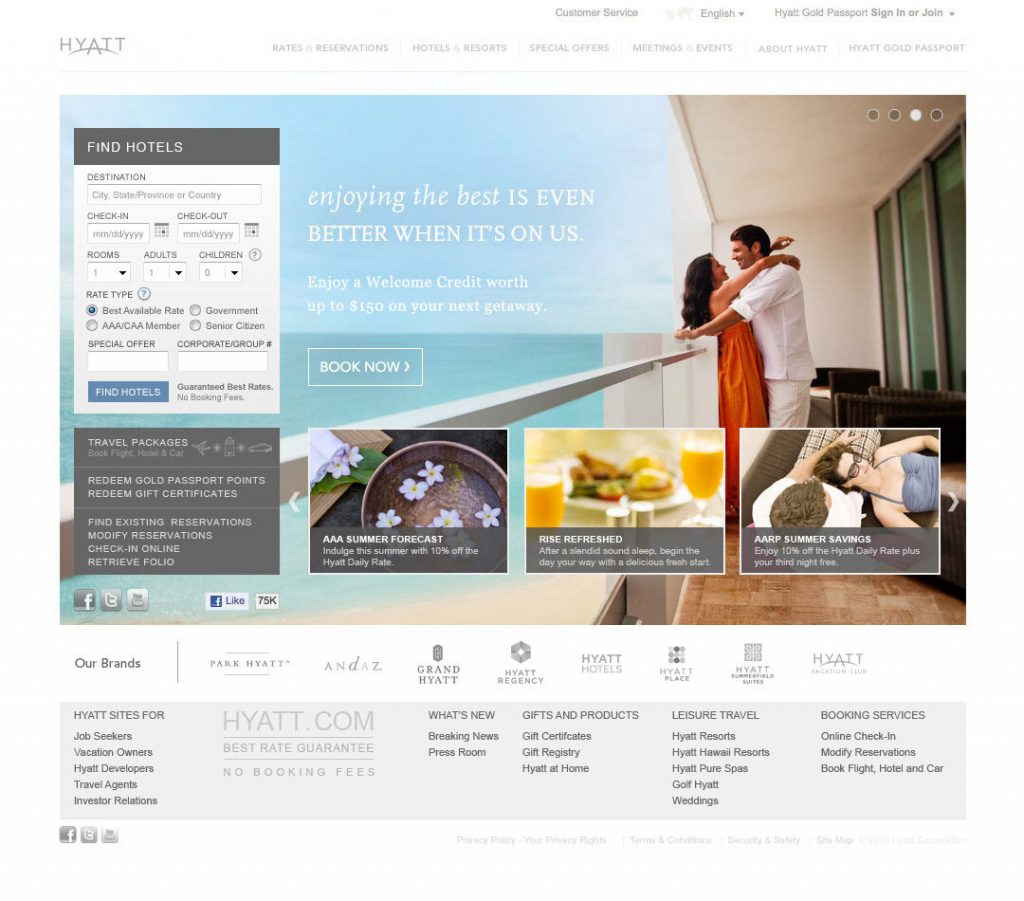
Hyatt’s landing pages are characterized by a clean and elegant design, aligned with the brand’s aesthetic. From the homepage to individual hotel or campaign pages, the structure maintains a clear visual hierarchy, with fixed top navigation, legible typography, and well-spaced content blocks.
Common and Differentiating Elements
Compared to other hotel chains, Hyatt stands out for using high-quality full-screen images paired with a minimalist navigation menu. While some brands opt for more information-heavy designs (like Accor or Melia), Hyatt prefers a more aspirational and visual approach.
Responsive design is very well implemented, adapting smoothly to mobile devices where quick access to availability searches and special offers is prioritized.
Conversion Strategies: A Clear Path to Booking
The conversion funnel on Hyatt’s pages is well defined, with an architecture that guides the user seamlessly from inspiration to action.
Clear CTAs and Direct Booking
Calls to action are consistent and visible: buttons like “Book Now” or “Check Rates” appear in prominent areas, with contrasting colors against the background. Hyatt also uses urgency techniques like “Limited-time offer” or “Save up to 20%” to reinforce conversion, especially in seasonal campaigns.
The booking interface is fluid, with advanced filters and the ability to easily compare rates. Unlike other brands that outsource this function to impersonal platforms, Hyatt retains control and design consistency throughout the process.
Storytelling and Visual Content: Selling the Experience, Not Just the Room
One of Hyatt’s strengths is its ability to convey an emotional experience. Storytelling is delivered through visual blocks that evoke feelings (relaxation, adventure, exclusivity) beyond the technical features of the hotel.
Images, Video, and Emotional Narratives
Visuals dominate individual property pages, with large galleries, immersive videos, and even testimonials from guests or brand ambassadors. This type of content better connects with modern travelers, who aren’t just looking for a bed, but a personalized and memorable experience.
Additionally, Hyatt uses benefit-driven copywriting (“Recharge with ocean views and rooftop pools”) instead of plain objective descriptions, further reinforcing the emotional connection.
Integration with Social Media and Digital Marketing
Hyatt maintains an active presence on social media, especially on Instagram, where high-quality images, destination stories, and collaborative campaigns stand out. However, this presence is not clearly mirrored on its landing pages.
Remarketing Strategies and User-Generated Content
Hyatt’s campaigns on Facebook Ads and Google Display Network use remarketing to reach users who have visited specific properties. However, cross-channel branding is not fully unified: while social media features emotional messaging, the landing pages tend to be more functional.
Also, although campaigns like “Hyatt Loves Local” integrate authentic content from users or local partners, this type of content rarely appears embedded directly on landing pages. Incorporating dynamic sections with real traveler photos, interactive maps, or suggested itineraries could improve time on page and increase conversion, while also strengthening the emotional bond with the destination.
Personalization and Experience Segmentation
Hyatt applies light personalization based on geolocation and basic user behavior. This results, for example, in country- or language-specific banners and recommendations for previously visited hotels.
Opportunities for Improvement: Contextual Personalization
There’s still room for a more segmented experience. For instance, a user who frequently searches for romantic getaways or spa resorts could receive more tailored recommendations on future visits, including inspirational content or highlighted services (such as massages, private dinners, etc.).
Here, solutions like Smartvel can play an important role by offering intelligent content based on traveler type (families, digital nomads, seniors, business), highlighting things to do near the hotel, or integrating personalized plans for the days of stay. A layer of value that increases relevance and boosts conversion.
Technology and Innovation: Interactive Experiences for the Traveler
Hyatt features a modern interface, solid mobile app integration, and a functional chatbot, although its innovation on landing pages remains somewhat conservative.
Innovation Opportunities
While other brands are experimenting with virtual tours, dynamic filters, or 3D experiences, Hyatt has yet to adopt these kinds of interactive tools. This presents a clear opportunity to create a richer digital experience, especially for its premium brands (such as Andaz or Alila).
Using personalized virtual assistants, local event calendars, or embedded experiences (like nearby tours or themed plans) are elements that not only modernize the web experience but also add value to the decision-making process. Again, Smartvel could be an ideal partner to enhance landing pages with up-to-date and contextualized information.
Web Design Trends in the Travel Industry
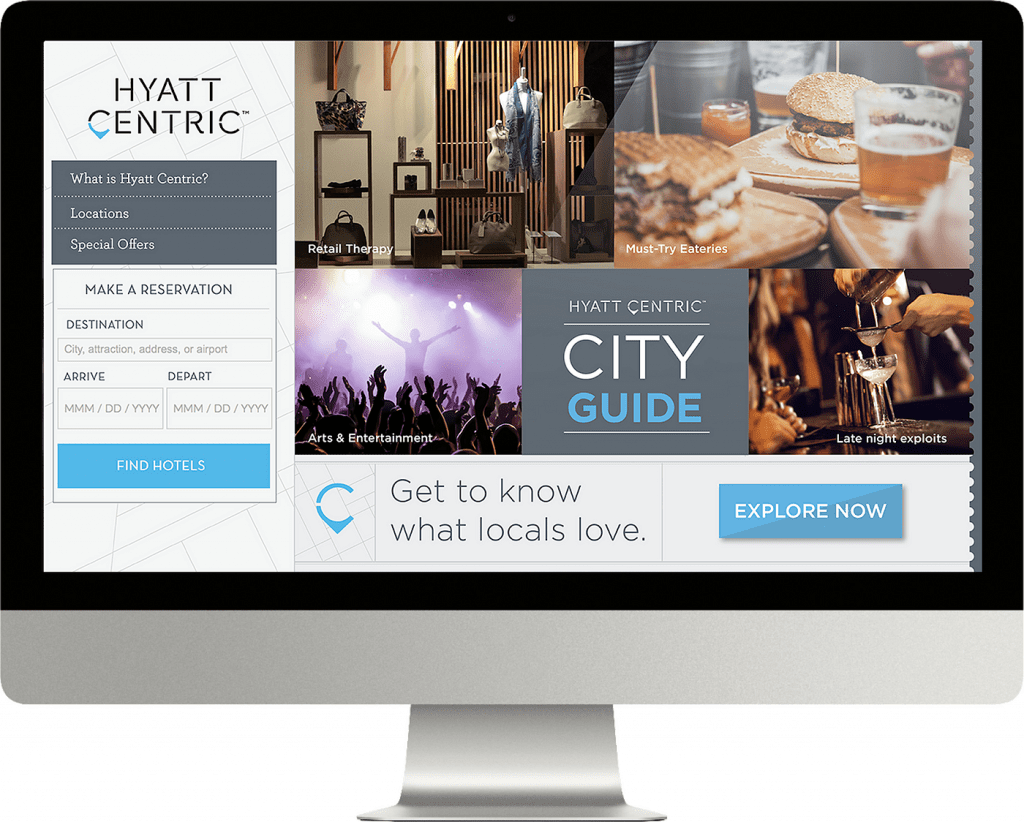
Hyatt adopts several current design trends, from functional minimalism to the use of microinteractions to enhance user experience.
Microinteractions and Smooth Navigation
Small details such as smooth hover animations, floating booking forms, and immediate visual feedback on user actions add modernity and sophistication to the browsing experience.
The use of long scroll design allows more content to be displayed without sacrificing loading speed or overall aesthetics. This is especially effective on destination or promotional pages.
SEO, SEM and Metrics Performance
According to data from Sistrix, Hyatt has maintained stable visibility over the last 12 months in the U.S. market, with growth spikes tied to campaigns like “Find Your Place” and seasonal offers.
Organic Ranking and Paid Campaigns
Landing pages are well optimized for SEO: structured titles, compelling meta descriptions, and proper use of keywords such as “luxury hotels,” “resorts in [destination],” or “best hotels for business travel.”
In SEM, Google Ads campaigns target highly competitive terms, using ad extensions and promotions to boost CTR. However, in non-English-speaking markets, SEO could benefit from better content localization, as many pages still default to English.
Technology and Innovation: Interactive Experiences for the Traveler
Hyatt has implemented some emerging technologies in its landing pages while maintaining a balanced approach between innovation and simplicity.
Chatbots and Virtual Assistants
The website features an AI-powered chatbot that answers frequently asked questions, helps with bookings, and connects users to customer service. While not as advanced as conversational AI from brands like Hilton or Expedia, it is functional and delivers a good user experience.
Immersive technologies such as augmented reality or virtual tours are not yet present, but they could significantly enhance the digital experience—especially in luxury properties or exotic destinations.
Conclusion: Hyatt, a Consistent Brand with Room to Shine Brighter
Hyatt’s landing pages stand out for their visual coherence, well-designed user experience, and aspirational tone. The brand communicates high-level hospitality through its digital ecosystem, with strong conversion strategies and emotionally resonant storytelling.
Still, there are clear opportunities to improve social media integration, broaden SEO reach globally, and enhance the user experience with more dynamic, interactive content. In this regard, solutions like Smartvel can provide real added value by integrating live destination content, trip planners, and event calendars that complement each hotel’s value proposition. A way to go beyond the booking and accompany the traveler throughout their digital journey.