


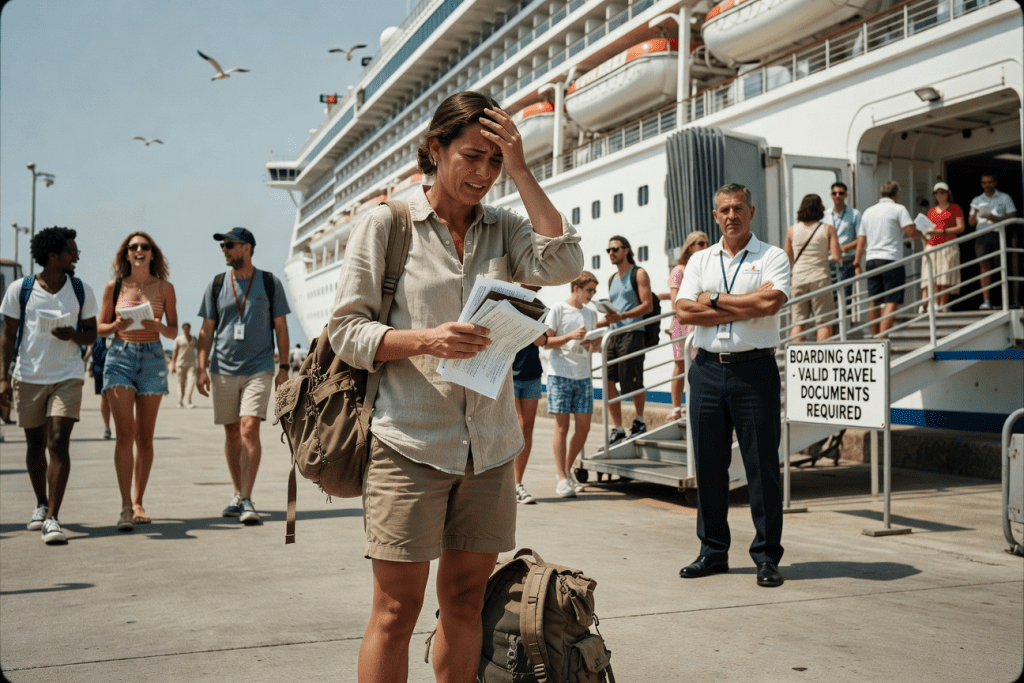
Picture the scene. A family arrives at a cruise terminal after months of saving and planning. Suitcases are ready, the excitement is at its peak, and the ship, imposing and magnificent, waits at the pier. However, upon reaching the check-in counter, the process grinds to a halt. The staff detects that one of the passengers does not have the required electronic visa or that their passport’s validity is less than the six months required by the destination country. The result is devastating: denied boarding.
For the traveler, it is a personal tragedy, but for cruise lines, this incident represents a financial problem much deeper than it appears at first glance. It is not just about an empty stateroom; it is a constant drain of additional profits and an operational burden that directly affects the profitability of the industry in an increasingly complex global environment.
Financial Impact on the Industry
The cost of a passenger who does not board is not limited to the ticket price they have already paid. In today’s cruise business model, the average ticket price is only part of the equation. Cruise lines obtain a critical percentage of their profits through onboard spending: shore excursions, beverage packages, specialty restaurants, spa services, and casino purchases. These services often carry much higher profit margins than the base accommodation fare.
According to data from the Cruise Lines International Association (CLIA), daily passenger spending on land and at sea is a vital engine for the sector’s economy. When a passenger is rejected at the terminal due to incorrect documentation, the company instantly loses the opportunity to generate those revenues throughout the entire voyage. Multiply this by the thousands of passengers who face visa issues annually, and the figure becomes alarming for financial directors.
Beyond the lost revenue, there are significant operational costs. Ground staff must dedicate time and resources to managing the crisis, processing the offloading of luggage that had already been delivered, and, in many cases, dealing with legal claims or refund requests. While contract conditions usually protect the cruise line in cases of lack of documentation, the damage to brand reputation and the cost of customer service are undeniable. A customer who remains on the pier, with their stateroom already assigned and paid for, is a customer who will likely never book with that line again.
Technology for Avoiding Chaos
The good news is that the sector is abandoning manual verification methods, which often relied on printed lists or the individual knowledge of each employee.
The automation of travel requirements has become a strategic tool for protecting profit margins. Instead of relying on the passenger to read confusing government pages, cruise lines are integrating intelligent systems into their booking and digital check-in processes. Advanced technological platforms allow that, at the time of booking, the system cross-references the passenger’s data with the migration requirements updated in real-time for each port on the itinerary. If a Caribbean cruise touches ports with different requirements, the system automatically warns if the traveler’s nationality requires a prior procedure or an electronic authorization. This digital proactivity eliminates human error at the point of sale and ensures that the problem is resolved months before reaching the port, guaranteeing that every stateroom is occupied by someone who can actually travel. The implementation of these solutions drastically reduces lines at the terminal. By digitizing document verification, ground staff can focus on providing a quality welcome rather than acting as border guards. Automation not only saves revenue but transforms a point of logistical friction into a competitive advantage that generates peace of mind for both the company and the final user.
Efficiency and Customer Loyalty
The benefit of investing in travel requirement technology goes beyond avoiding the loss of an immediate sale. It is about loyalty and building a relationship of trust. A passenger who receives a clear notification three weeks before their trip stating exactly which link to click to obtain their visa perceives a high-value service. They feel cared for by the organization. From an analytical perspective, cruise lines that have adopted automated verification report a substantial reduction in denied boarding incidents.
This translates into a higher actual occupancy factor and greater predictability of revenue from additional services. In such a competitive market, where margins are sometimes decided by small percentages, ensuring that one hundred percent of passengers who paid for their reservation can actually board the ship is fundamental.
Digital transformation in this area also allows companies to collect data on the nationalities and profiles that encounter the most difficulties. With this information, customer service departments can design more specific communications, further simplifying the user experience and removing any psychological barriers before the trip. At the end of the day, a full stateroom is the only way to ensure that the consumption ecosystem within the ship operates at full capacity.
Investment with Guaranteed Return
Finally, we must understand that automation is not a luxury, but an operational necessity in a world with increasingly dynamic migration regulations. The cost of implementing requirement management software is minimal compared to the accumulated losses from empty staterooms and dissatisfied customers who spread their bad experience on social media.
Leading companies already using these systems have understood that the passenger experience begins long before stepping onto the deck. It begins the moment technology ensures everything is in order for their adventure.
By protecting the traveler from bureaucracy, cruise lines are, ultimately, protecting their own cash flow and ensuring the long-term sustainability of their global routes. The future of cruising is digital, fluid, and, above all, free of unpleasant surprises at the boarding counter.