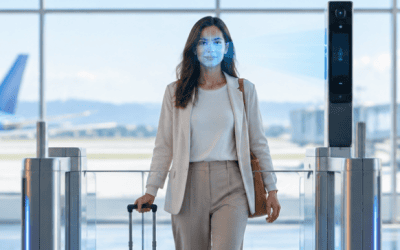
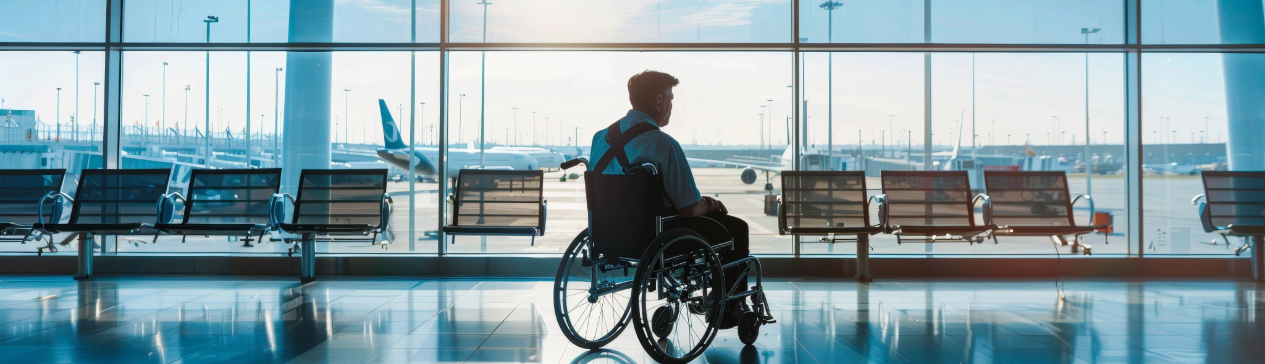

Traveling is a right that allows us to connect with the world, but for people with reduced mobility or disabilities, the joy of discovering a new destination is often accompanied by a significant amount of stress before even being on the plane. When we talk about accessibility in air travel, the conversation usually focuses immediately on physical barriers: ramps, elevators, or adapted restrooms. However, recent studies and the direct experience of travelers we have surveyed suggest that the real obstacles are not always these. The real problem lies in something much more intangible but equally limiting: the lack of clear information and the absence of proper staff training.
When a traveler with special needs plans a vacation, uncertainty is their greatest enemy. According to the accessibility survey we conducted at Smartvel, 60% of users have trouble choosing a destination simply because they don’t know if services will be adapted. This barrier isn’t made of concrete; it’s made of communication. If you want to dive deeper into the legal framework protecting these travelers, you can consult the European Union Regulation (EC) 1107/2006, which establishes basic rights in air transport.
The information barrier
Access to accurate data is essential to reducing passenger anxiety. Travelers aren’t looking for perfection; they are looking for transparency. They prefer to know in advance if they will have to check their wheelchair or what the boarding process will be like, rather than encountering unpleasant surprises at the terminal. Research indicates that 58.3% of passengers prefer to use the airline’s website to request assistance, making these platforms the most critical point of contact.
Despite this preference, information is often generic and hard to find. A user with an electric wheelchair needs to know specific battery protocols, while someone with limited mobility who can walk short distances needs to know the exact location of meeting points. When airlines fail to offer this personalization, the traveler loses control over their own experience. To better understand how these needs are classified, IATA provides SSR codes that standardize assistance worldwide.
Security and critical distances
Even when airport infrastructure is modern, there are points in the journey that cause constant friction. Security checks are the most stressful moment for 40% of travelers with reduced mobility. The lack of consistent protocols and the pressure of queues turn this step into a source of stress. It’s not a question of whether the scanner is accessible, but how staff manage the screening of someone who cannot stand up from their chair.
Another major challenge is the long distances within terminals. 40% of users report difficulties navigating the paths between the check-in counter and the boarding gate. In Spain, Aena’s “Sin Barreras” service attempts to mitigate this, but coordination between airport assistance and airline staff remains a weak point. Synchronization between these two teams is vital so that the passenger does not feel abandoned in the middle of the process.
Dignity and technical training
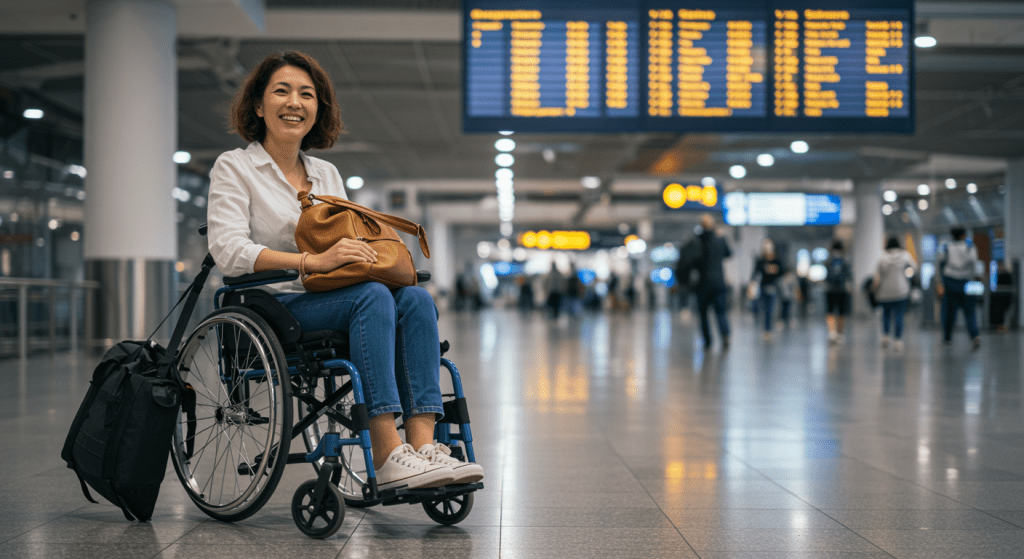
The human factor is, perhaps, the most decisive component of the trip. Many passengers report that staff often address their companions instead of speaking directly to them. This treatment affects the traveler’s dignity and autonomy. Furthermore, there is a worrying gap in technical training. Incorrect handling of expensive mobility equipment or a lack of skill when performing transfers to the airplane seat poses a real risk to the traveler and their safety.
Training must go beyond basic courtesy. Staff need to understand the technical specifications of different types of chairs and how to ensure a comfortable and safe transfer. Investing in specialized training is not just a matter of customer service; it is a social responsibility obligation. Well-prepared staff can transform a complex situation into a seamless process, giving the passenger the confidence they need to keep traveling.
Toward true inclusion
The future of air transport must focus on eliminating invisible barriers. This means airlines must take the lead by integrating digital accessibility into their booking processes and ensuring that information is easy to find and understand. Collaboration with user associations is the way to design services that actually work in the real world.
After all, accessibility benefits all of society, including an aging population that also requires specific support. Turning air travel into an inclusive system requires a firm commitment to transparency and continuous training. When the flow of information is as solid as the infrastructure, flying with reduced mobility will stop being a process full of doubts and become what it was always meant to be: the start of a new adventure.