
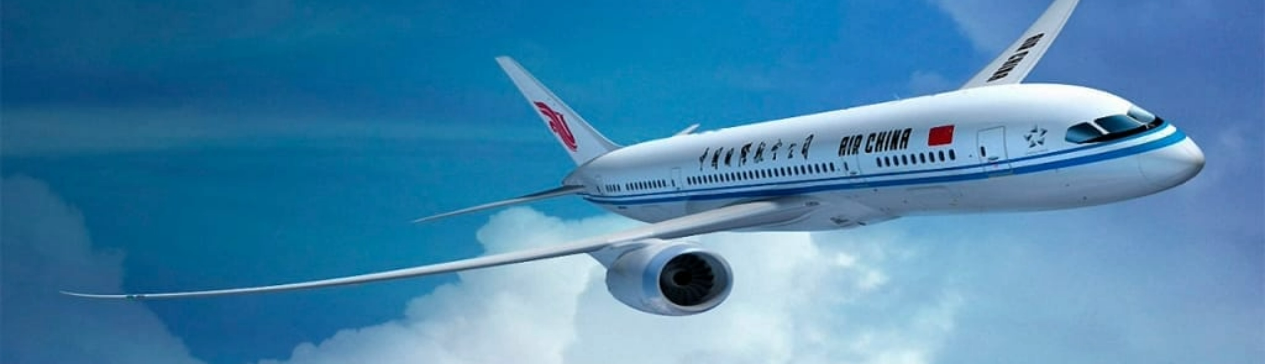

If you work in tourism marketing, analyzing how major airlines structure their landing pages is a goldmine of ideas—and also of “antipatterns” worth avoiding. Today we dissect Air China: what it does well in design and UX, how it drives conversion, the role of visual content and social media, and where it can evolve with personalization, web performance, and interactive experiences.
Design and Usability: What We See Upon Landing
Air China’s entry point is a country/language selector that redirects to regional domains (e.g., .us or .cn). It’s a logical decision to meet regulations and adapt content, already implying a baseline layer of geolocation. In the international version, the homepage prioritizes critical tasks: flight search, manage bookings, check-in, and flight status—very much “task-first.”
Compared to the hotel sector—where homepages lean more on visual inspiration and storytelling modules—Air China maintains a more functional and direct approach, typical of the airline vertical. On the Chinese site (.com.cn), the navigation hierarchy reinforces this transactional logic (“Booking,” “Flight Status,” “Check-in”) with access to PhoenixMiles, campaigns, and ancillary services, reducing friction for frequent users.
UX strengths:
- Task-oriented architecture and visible access to “Manage My Trip”, which centralizes changes, check-in, and refunds—key to reducing post-purchase anxiety.
- Multi-region structure from the very first click, aligned with requirements for payment methods, currencies, and localized messaging.
Risks/challenges:
- Fragmented experience across domains/regions that may present inconsistent styles and flows; anecdotal evidence suggests friction in some markets (perceptions of “outdated” UI). This is not conclusive but highlights the importance of visual consistency and clear microcopy.
Conversion Strategies: From “Search” to “Book”
Airline conversion happens at two points: the booking engine and post-purchase. At Air China, the funnel is reinforced with:
- Persistent primary CTA on the homepage (flight search).
- Direct-channel benefits highlighted on mobile (discounts on domestic routes, local payment methods, etc.), a typical argument to gain share against OTAs.
- Self-service trip management (changes, refunds, notifications), which lowers service costs and improves NPS, positively impacting future conversions (repeat bookings).
To extend the funnel, the official app adds re-check-in, flight status, PhoenixMiles, re-issuance, and a “travel advisor.” It acts as an “always-on” tool that captures behavioral data and facilitates upselling (seats, baggage, services).
Storytelling and Visual Content: Function Over Aspiration
Airline landing pages often balance inspiration (destinations) with transaction. At Air China, the focus is more utilitarian: forms take center stage, not hero galleries or videos. That speeds up tasks but reduces emotional branding compared to competitors and the hotel sector (which sells both stay and experience). Strengthening destination-themed modules (seasons, festivals, cultural routes) with concise copy and high-quality visuals would help increase time on page and CTR towards exploratory searches (not just “flight to”).
Here, dynamic destination content (guides, events, entry requirements) allows brands to connect dream ✕ planning ✕ booking. This is where solutions like Smartvel can add value by embedding updated information on what to do at destination, itineraries, and event calendars directly into the route landing page.
Social Media Integration and Digital Marketing
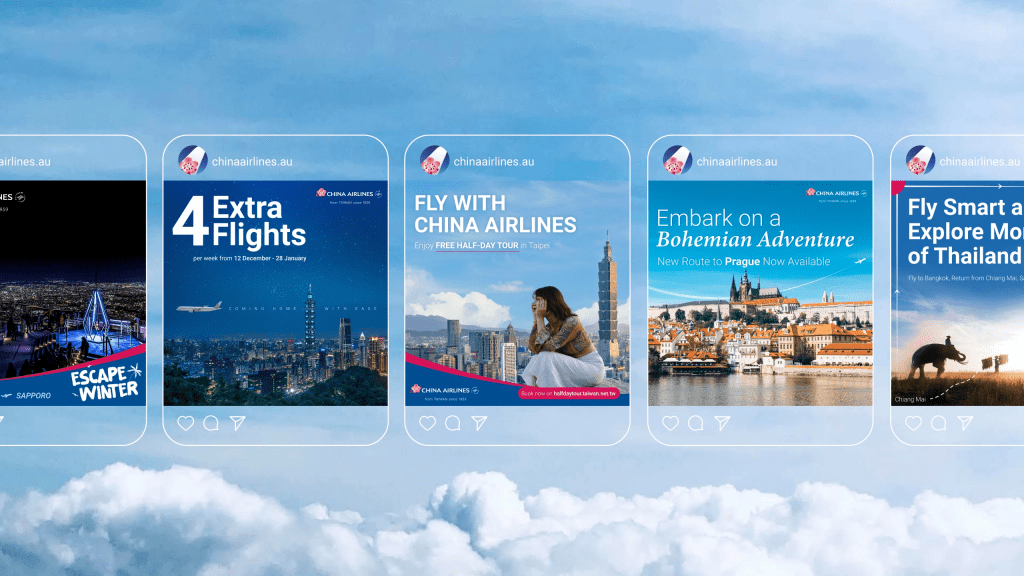
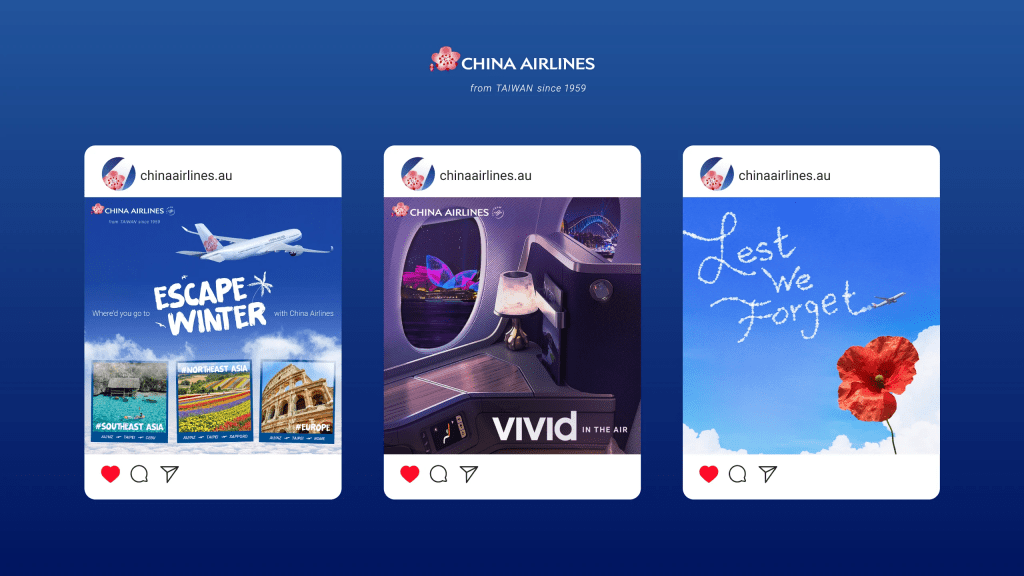
Air China maintains an international presence on Instagram and X (formerly Twitter). The Instagram bio points users to service channels and the website, suggesting a more editorial/corporate use than pure customer service. For performance campaigns, these properties serve as bridges to transactional landings, but UGC, testimonials, and reels on strategic routes could be leveraged more.
An interesting asset is the communication of differential features via social: for example, videos showing VR seat selection for A350-900 models through the app—an ideal hook for retargeting campaigns that drive to a dedicated “onboard experience” landing.
Personalization and Segmentation: From Geolocation to Relevant Offers
The country/language selector indicates a first layer of segmentation. Industry practice typically adds:
- Local currency/payment methods (already visible in app and mobile communications).
- Offers by origin/destination, detecting IP or prior preferences.
- Messaging based on stage (first visit vs. PhoenixMiles member).
Although there’s no public documentation of detailed personalization scenarios on its website, the multiregional pattern and app login suggest capacity for tailored experiences (e.g., upgrade promotions only for members with X miles pending).
Recommendation: include smart blocks on route landings with destination content and contextual entry policies, maximizing relevance and reducing pre-purchase uncertainty.
Applied Web Design Trends
- Mobile-first and quick task access (check-in, status, manage): aligned with airline best practices.
- Functional minimalism over inspirational hero: speed vs. branding.
- Microinteractions: opportunity. Small feedbacks in fare selection, comparators, and “price freeze” would improve clarity and reduce doubts.
- Adaptability and performance: with INP becoming a Core Web Vital in March 2024, monitoring booking engine response and third-party elements (payment methods) is critical, especially in latency-heavy markets.
SEO, SEM, and Metrics: Digital Visibility and “Health”
Internationally, Air China operates multiple domains/regions, complicating measurement of a single global “VI.” Without direct access to the brand’s Sistrix accounts (Visibility Index = reference KPI for organic SEO), we can contextualize: Sistrix defines VI as a metric based on rankings over a representative set of keywords, weighted by volume and position. It’s useful for spotting country/host trends and detecting drops due to technical or algorithmic changes.
As a public proxy, Similarweb ranks airchina.com.cn at the top of its category in China, with ~1.1M estimated monthly visits, >5 pages per session, and <40% bounce rate (last three months to August 2025). These are strong engagement signals for the local site, though not directly extrapolable to other regions.
Technological Innovation and Interactive Experiences
Air China has announced VR seat selection for certain models via its app. Properly integrated into the “onboard experience” landing, this feature increases perceived innovation and reduces uncertainty. Chinese carriers have also piloted AR glasses onboard, signaling broader adoption of immersive experiences in coming years.
In self-service, the app already offers rebooking, itinerary management, and notifications; bringing that set to the website (with seamless mobile↔desktop handoff) is key to reducing friction. Add-ons like chatbots/AVIs can cover FAQs and simple flows (baggage, seats, requirements), freeing up call centers during peaks.
Improvement Opportunities (and How to Capitalize)
- Visual consistency and UI patterns across regions
Establish a transversal design system to reduce local deviations and ensure consistent components, states, and microcopy. - “Actionable inspiration” modules on route landings
Add live destination content blocks (what to do, events, neighborhood tips) alongside fare matrices. This increases time on page and helps date selection. Smartvel, for example, provides embeddable city guides and event widgets, updated and filterable by interests. - Performance and Core Web Vitals in the funnel
Audit LCP/CLS/INP especially at checkout, where payment scripts and validations can impact responsiveness. - “Light” personalization without friction
Show origin-based prices, recent search reminders, and PhoenixMiles benefits by status. In international markets, adapting local payment methods and trust messaging tends to improve CVR. - Social proof and UGC
Bring testimonials and Instagram UGC carousels (rights-managed) into landings, plus punctuality/safety badges and flexible guarantees—reducing perceived risk before payment. - Interactive campaigns
Leverage VR seat selection in ads and landings, with integrated demos or short videos showcasing the real experience.
Air China’s Strengths and Opportunities
Air China stands out for a web architecture highly oriented to critical tasks—check-in, booking management, or flight status—plus an app with advanced features such as rebooking, real-time notifications, and even VR seat selection. Its multiregional strategy, adapting language, currency, and payment methods, strengthens global accessibility and consolidates its self-service proposition.
However, clear improvement areas remain: lack of visual consistency across domains and markets, limited inspirational content on route landings, and performance challenges in the booking funnel. A major opportunity also lies in integrating more user-generated content and trust signals that add proximity and reduce purchase risk perception.
Strategic Reflections
Air China shows a clear functional priority—in line with airline standards—with a multiregional ecosystem addressing critical tasks and a powerful self-service app. To take the next leap, the brand can elevate emotional and trust components on landings, strengthen consistency across regions, and leverage dynamic destination content, light personalization, and performance improvements focused on INP and checkout. That combination not only drives conversion; it also builds differentiated brand perception in an increasingly competitive market.